Energy Conservation Measures (ECMs)
Smarter Labs. Lower Energy. Greater Impact.
Laboratories offer numerous opportunities to reduce energy consumption while maintaining safety and performance. By establishing a baseline, monitoring system performance, and identifying savings potential, facility teams can prioritize Energy Conservation Measures (ECMs) based on their cost, impact, and expected return on investment.
Some of the most effective laboratory ECMs include:
The Most Effective Lab Energy Conservation Measures
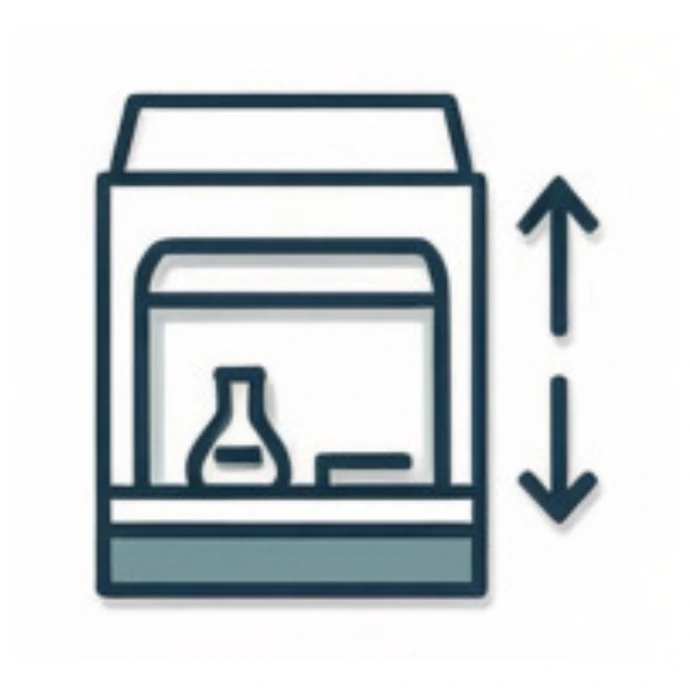
Fume Hood Sash Management
Reducing the amount of time fume hood sashes remain open significantly lowers exhaust airflow and energy consumption while maintaining safe operation. Common approaches include:
- Automatic Sash Closers – Automatically close fume hood sashes when the hood is not in use.
- "Shut the Sash" Programs – Encourage users to close sashes through awareness campaigns, competitions, and incentives.

Variable Air Volume (VAV) Air Quality Management Systems (AQMS)
Adjust ventilation rates based on occupancy and real-time indoor air quality. By reducing air changes when spaces are unoccupied or contaminant levels are low, facilities can achieve substantial energy savings without compromising safety.

Demand Control Ventilation (DCV)
Modulate ventilation based on actual room demand rather than fixed design conditions. This reduces unnecessary conditioning of outside air while maintaining required environmental conditions.
Fume Hood Performance Monitoring
Continuously monitor parameters such as sash position, occupancy, airflow, and hood performance to identify operational issues, improve user behavior, and reduce unnecessary energy use.

High Turndown Ratio Venturi Valve Retrofits
Replace older airflow control valves with high turndown Venturi valves to improve airflow accuracy, response time, control stability, and energy efficiency across a wider operating range.
Discharge Air Temperature Optimization
Optimize supply and discharge air temperature setpoints to reduce unnecessary cooling, reheating, and ventilation demand while maintaining occupant comfort and laboratory performance.
Occupancy Detection
Use occupancy sensors to adjust ventilation rates based on whether laboratory spaces are in use. This allows airflow to be safely reduced during unoccupied periods, minimizing energy consumption.

Energy Recovery Systems
Capture and reuse energy from exhaust air using technologies such as run-around coils, heat wheels, or plate heat exchangers to reduce heating and cooling loads on the building.

Scheduled Setbacks
Automatically reduce ventilation rates, temperature setpoints, and equipment operation during evenings, weekends, and other periods of low occupancy to minimize energy use.

Benchmarking
Measure and compare laboratory performance against historical data or similar facilities to identify improvement opportunities, establish performance targets, and track the effectiveness of implemented ECMs..
ENGAGE & EMPOWER YOUR PEOPLE
Engage lab occupants in energy conservation through training, clear communication, and recognition.User awareness and participation are key to sustaining energy savings.